What belongs on a commercial invoice
When a client in another country pays by bank wire, the invoice has to name the work, the currency, and the account. What to include, and what Wire Invoice does not do.
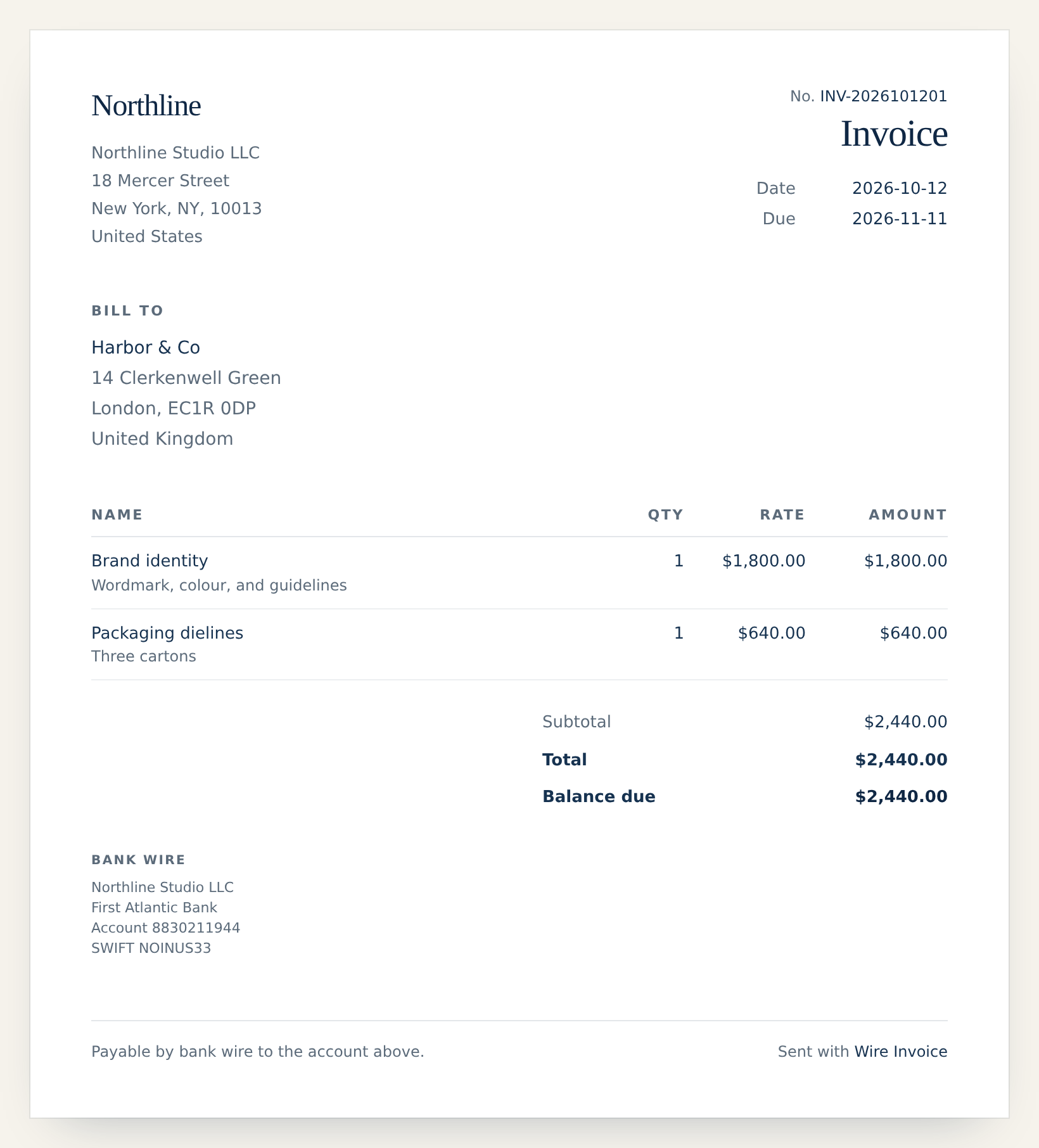
The page your client pays from
A client in another country needs a commercial invoice, not a rough quote. It names who sold, who is paying, what was delivered, the amount, and the currency.
Their accounts team pays from that page. A forwarder may use it when the goods cross a border. It is not a receipt after the money has arrived.
Use the currency they will wire
Put the invoice in the currency they actually send, usually USD, EUR, or GBP. On the same page, give the bank details for that currency: account name, bank, SWIFT, and IBAN where they need it.
They pay that account directly. The money does not pass through Wire Invoice.
Send it when you want to be paid
A proforma is the estimate you send before the order is firm. The commercial invoice is the one you send when the work is agreed and you want the wire. The description and the amount should match what you delivered.
Your books are a second line
The PDF shows only the currency the client pays. For your own books, Wire Invoice totals in USD and adds a line in the local currency of your company location. That local amount stays on your dashboard. It is not printed for the client.
What Wire Invoice does
It turns those details into an A4 PDF, or a link the client can open without an account. Bank details are stored separately for each currency. It does not collect the payment, and it does not file your tax return.